What to Wear on a Red-Eye: The Layer System That Survives a Night on a Plane

Quick Answer: A red-eye needs four layers that each do one job: a soft base you can sleep in, a mid layer for the cabin cold that hits around hour three, an outer layer that doubles as a blanket, and a change of one item - usually the top - in your carry-on for arrival. Elastic waists, no hardware at the back, and closed shoes you can slip off are the details that make or break it.
Overnight flights fail differently than day flights. You aren’t sitting; you’re trying to sleep upright in a cold metal tube and then walk into a morning. Dress for both halves.

What makes a red-eye different from any other flight?
Three things that daytime travel advice doesn’t account for.
Cabin temperature drops overnight. Cabins typically run around 22-24C but feel considerably colder once you’re inactive for hours, and crew often lower it further during sleep hours. The chill that arrives around hour three is the single most common reason people don’t sleep.
You’re compressing against a seat for hours. Any seam, waistband, button, or back pocket becomes a pressure point at hour five that you’d never notice at hour one. This is why jeans, however soft, are a poor red-eye choice - the back pockets and rivets sit exactly where your weight does.
You arrive at the start of a day, not the end of one. A daytime flight ends at a hotel. A red-eye frequently ends at a meeting, a family breakfast, or a full day of activity with no shower in between.
Designing around those three is the whole exercise.
The four-layer system, piece by piece
Layer 1 - the sleep base. Soft leggings or wide-leg knit trousers with a fully elastic waist, plus a seamless or low-seam top. This is the layer touching you for eight hours, so it’s the one where fabric matters most. Look for something with a smooth face and no decorative hardware.
Layer 2 - the warmth layer. A lightweight knit or a thin fleece that packs down small. This goes on around the time the cabin cools and comes off before landing. Zip-front is more useful than pullover because you can regulate temperature without a full change.
Layer 3 - the blanket layer. An oversized cardigan, a large scarf, or a wrap. This layer’s real job is doubling as bedding, because airline blankets are thin and not always available. A wrap that covers your shoulders while you lean against a window is worth more than an extra jumper.
Layer 4 - the arrival item. One clean top, folded flat in your carry-on. Not a whole outfit - one item. Changing your top in the airport bathroom does roughly 80% of the work of looking presentable, at about 5% of the effort.
What Nobody Tells You About Dressing for Overnight Flights
Your feet swell more than you expect. Cabin pressure and hours of immobility mean shoes that fit at boarding can feel tight on descent. Choose shoes with some give and expect to loosen laces mid-flight. Slip-ons that stay on are ideal - going barefoot on a plane floor is genuinely unpleasant and you’ll need to walk to the bathroom at least twice.
Compression socks are the single highest-value item on this list for flights over six hours, and almost nobody packs them. Prolonged immobility in a low-pressure cabin is associated with reduced circulation in the lower legs, and graduated compression socks are the standard practical recommendation. If you have circulation concerns or a relevant medical history, ask a doctor about them specifically. This is general information, not medical advice.
Hoods work better than neck pillows for side sleepers. A hood gives you something to pad against the window and it doesn’t fall off. Many people who never use a hood at home find it’s the most useful feature on a flight.
Dark colours hide the inevitable. Something will be spilled on you or by you. This is not pessimism; it’s eight hours in a confined space with beverages.
Skip anything that wrinkles visibly. Linen looks wonderful boarding and looks slept-in on landing, because it was. Knits, jersey, and technical blends recover; woven natural fibres largely don’t.
And the security detail: no belt, no complicated boots, minimal metal. A red-eye departure often means a thin security queue and a tired you - the fewer items to remove, the better.
How do you actually look presentable on arrival?
A twenty-minute routine in the arrivals bathroom, planned in advance.
Change the top. The single highest-impact swap. A fresh top with the same trousers reads as a complete outfit change to everyone who sees you.
Face and teeth. A small pouch with face wipes or micellar water, moisturiser, a toothbrush, and deodorant. Kept at the top of your bag, not buried, because you’ll be doing this half-asleep.
Hair, realistically. Dry shampoo and a hair tie handle most of it. A style you can execute in a mirror while tired is worth more than a style that requires effort.
Shoes back on before the swelling settles. Put shoes on 30-40 minutes before landing rather than at the gate, so you’re not fighting them while people queue behind you.
And plan where. Airport bathrooms just past baggage claim are usually far quieter than those in the arrivals hall. Two minutes of scouting saves ten minutes of queueing.
What to keep at your seat versus in the overhead
Overhead bins are effectively sealed once the cabin dims, so the seat-side kit matters.
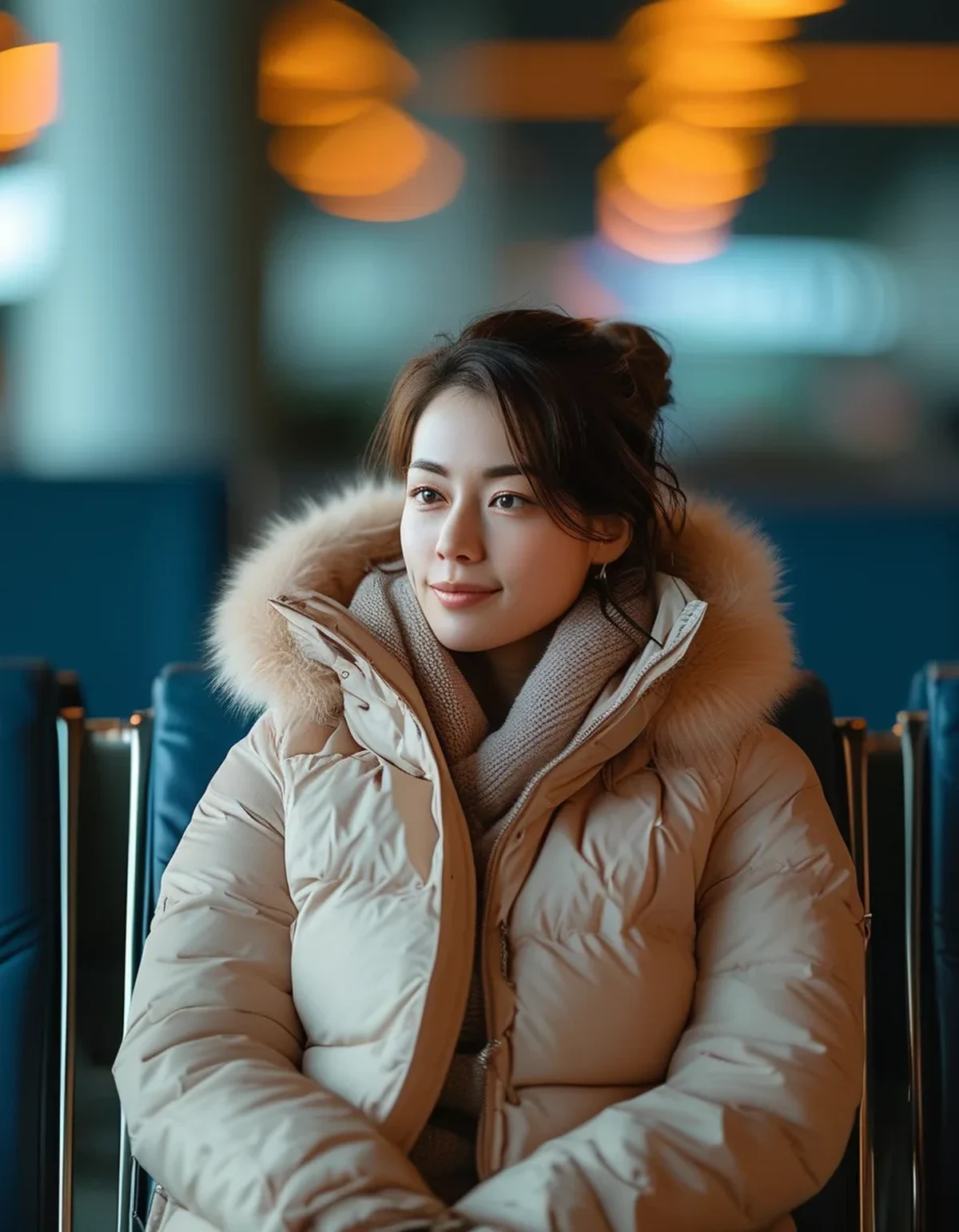
At your seat: the warmth layer, the wrap, compression socks if you didn’t wear them from the start, water, lip balm, eye mask, earplugs or headphones, and any medication.
In the overhead: the arrival top, wash kit, and anything you’ll only need before landing.
Lip balm and eye drops deserve a specific mention - cabin humidity is very low, often below 20%, and dryness is one of the most reliable discomforts of a long flight. Both weigh nothing.
A small bag inside your bag for the seat-side items means you can pull one pouch out rather than excavating a rucksack in the dark while someone sleeps next to you. It’s a small thing and it makes the whole flight feel more manageable.
FAQ: Red-Eye Outfit Questions, Answered
Are leggings actually appropriate if I’m going straight to work?
With a longer top and a structured outer layer, generally yes for most workplaces. If not, wide-leg knit trousers give you the same comfort with a more formal read.
Should I sleep in the compression socks?
That’s the point of them on a flight - they’re for the seated hours. Whether to keep them on afterwards is a question for a doctor if you have any relevant condition.
Is a full change of clothes worth the space?
Usually not. One clean top plus a wash kit gets you most of the benefit for a fraction of the bag space.
What about jewellery?
Minimal. Anything that catches on a blanket, presses against a seat, or needs removing at security is more trouble than it’s worth at 1am.
TL;DR:
- Four layers: soft sleep base, warmth layer, blanket layer, and one clean arrival top
- Avoid back pockets, rivets, and stiff waistbands - they become pressure points by hour five
- Compression socks are the highest-value item most people skip on long flights
- Keep the seat-side kit in one small pouch: warmth, water, lip balm, eye mask
- Change your top and brush your teeth on arrival - it does most of the work
Dress for the second half of the flight, not the boarding gate. The boarding gate is only twenty minutes.
See It in Motion
Seen here: Super High Waist Embossed Yoga Leggings with Inner Pocket — shop it on bubblelime.com
Keep Reading
This article is for general informational and styling purposes only. Fit, sizing, and product availability may vary.