What to Wear When the Flight Is Delayed Six Hours (Nobody Dresses for This)

Quick Answer: Dress for the delay, not the flight. Three features do almost all the work: a mid-layer you can bunch into a pillow, a bottom with no rigid waistband that stays comfortable after eight hours of sitting, and shoes you can take off and put back on without touching them with your hands. Add a scarf or wrap that doubles as a blanket, and keep one clean layer sealed in your carry-on for the morning. Terminals run cold overnight when the crowd thins, so plan warmer than the daytime terminal you walked into.
The outfit worked beautifully for three hours. Then the delay became a cancellation, the gate agents ran out of hotel vouchers, and you discovered that everything you are wearing was chosen for a person who would be somewhere else by now.
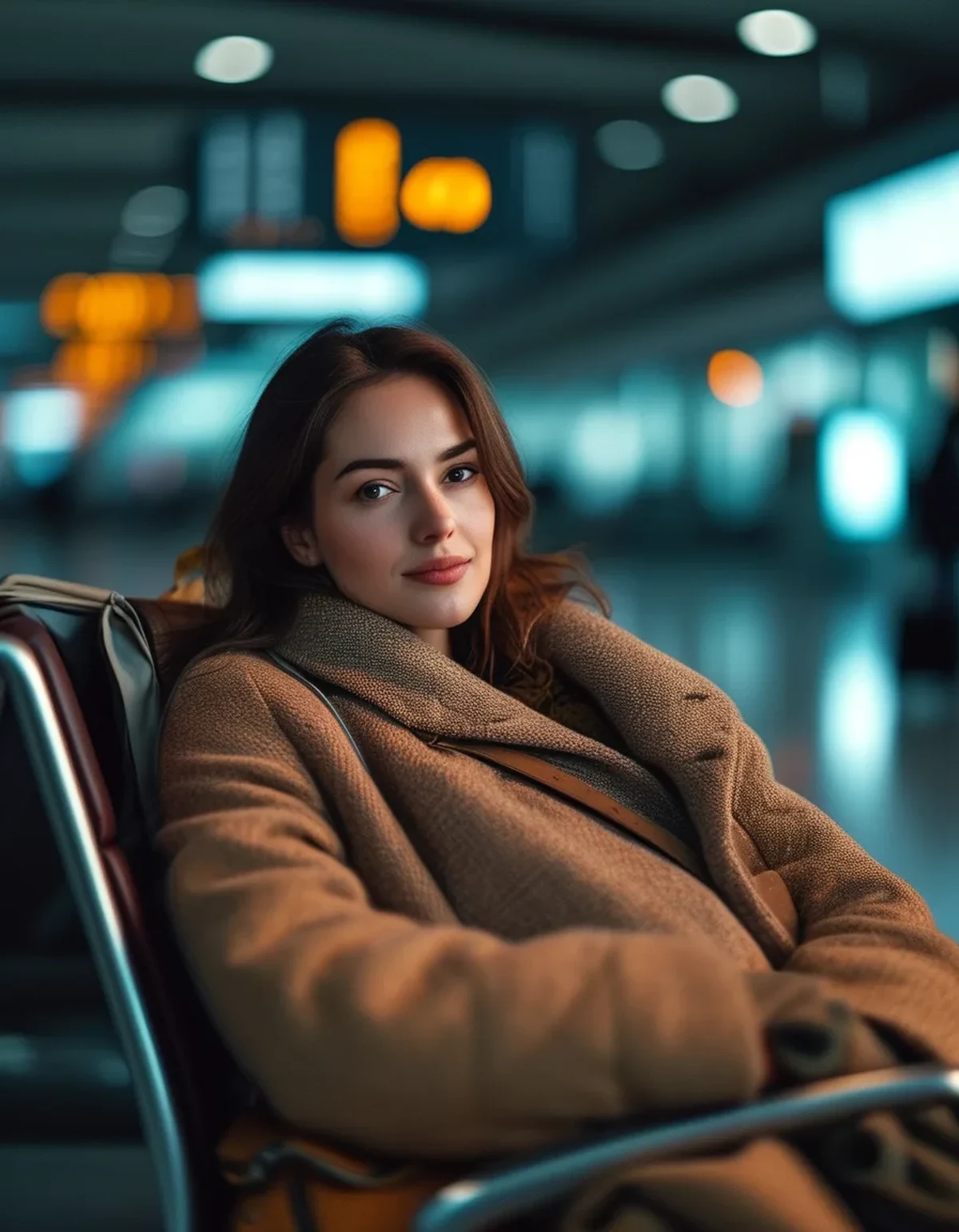
What actually changes when a short trip becomes an overnight?
Sitting time goes from two hours to twelve. Any waistband with a rigid button, a stiff seam, or a low rise that folds when you sit becomes genuinely uncomfortable after hour six. This is the single most common regret, and it is not about looking casual - it is about pressure on your abdomen for half a day.
Temperature swings widen. Terminals are climate-controlled for a crowd, and when the crowd leaves at 11 pm the space gets noticeably colder. Add reduced movement, a lower core temperature overnight, and hard seating that conducts heat away from you, and a perfectly comfortable daytime outfit becomes a cold night.
Shoes become a real problem. Feet swell over long sitting periods, particularly if you have already flown a leg. Anything you have to unlace to remove is a problem you will solve badly at 2 am, and walking barefoot in a terminal is not a good plan.
And you lose your fresh-clothes assumption. The outfit you planned to arrive in has now been worn for 20 hours. Whether you have one sealed clean layer in the carry-on is the difference between arriving functional and arriving unpleasant.
One more thing nobody plans for: you will be more visible than you expected. Delays mean gate changes, service desks, help lines, and possibly a hotel lobby. An outfit that reads as pajamas is a real constraint on how comfortable you feel doing all of it.
What are the specific pieces that hold up?
A soft, high-rise bottom with a flat or drawcord waistband. Wide-leg knit trousers, a straight-leg soft pant, or a ponte legging all work. The requirement is no rigid closure at the abdomen and enough coverage that lying across seats does not become a management problem.
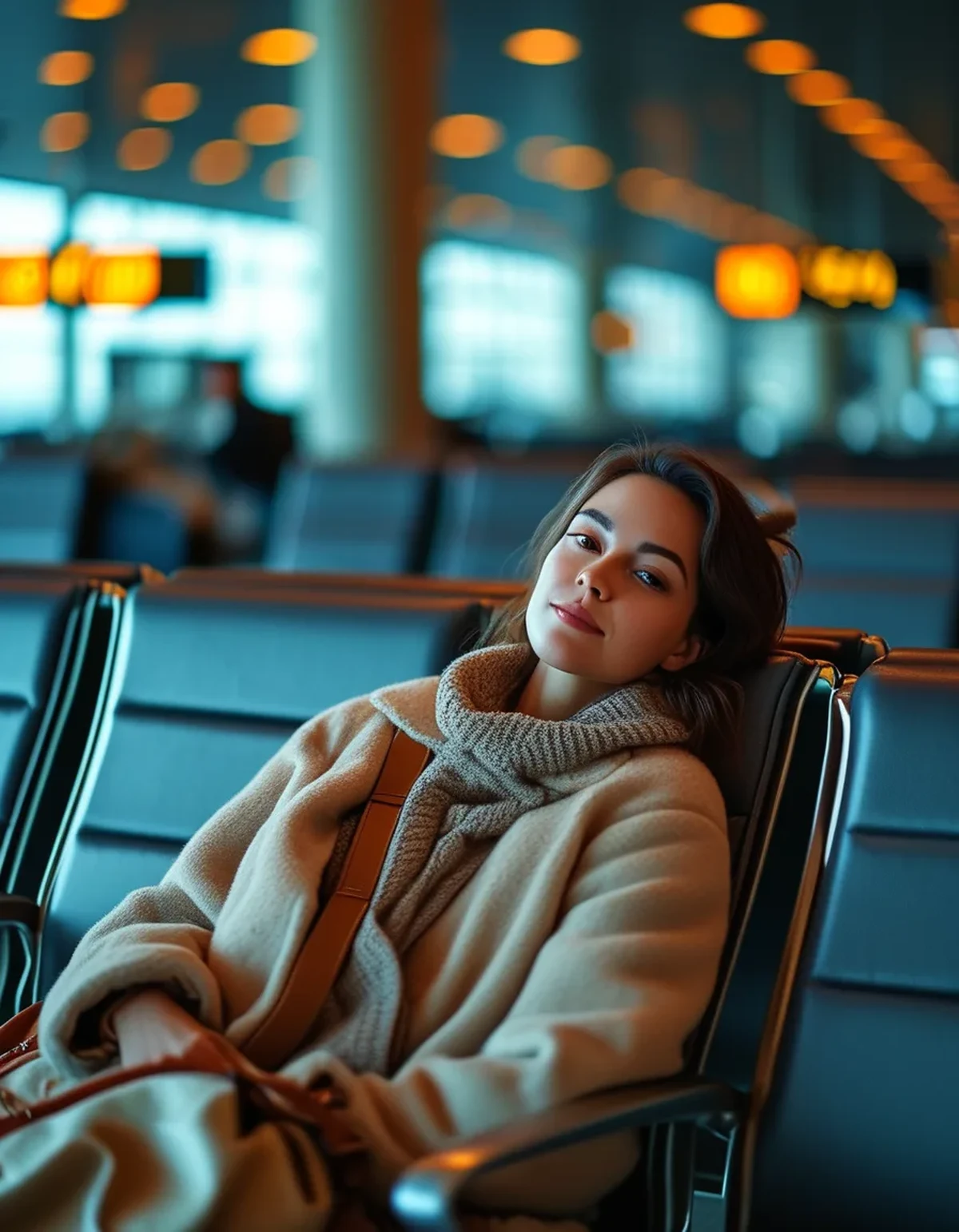
A mid-layer that compresses into a pillow. A packable puffer, a fleece, or a thick knit cardigan. This is the highest-value single item in the outfit: warmth when you are cold, a pillow when you are not, and a bag cover when you want your things under your head.
A large scarf or wrap. It is a blanket, a shoulder cover, an eye shade against terminal lighting that never dims, and a privacy layer. Airline blankets are not guaranteed and terminal blankets certainly are not.
Slip-on shoes with a real sole. Loafers, sneakers you can heel-slip, or slides worn with socks. The test is whether you can get out of them and back into them hands-free while holding a bag and a phone.
Socks, always, and a spare pair in the bag. A fresh pair of socks at hour 14 does more for morale than almost anything else you can carry, and it weighs nothing.
One clean top sealed in a bag. Not a full outfit - one layer. Changing the top and the socks in the morning restores about 80 percent of the feeling of being a functional person, and it is the difference between arriving at a meeting or a family reunion able to cope.
And a hoodie or cap if you want to sleep at all. Terminal lighting is designed for wayfinding, not for rest.
5 Mistakes Everyone Makes on a Delay Day
Mistake one: dressing for the destination. People fly to warm places in warm-place clothes and then spend the night in a 66-degree terminal. Dress for the coldest point of the journey and carry the destination outfit.
Mistake two: packing the warm layer in the checked bag. If the bag is checked, it may already be in a different city than you are. Anything that matters for the delay scenario belongs in the carry-on, no exceptions.
Mistake three: wearing anything that needs managing. A wrap dress that shifts, a top that rides up, a skirt that makes lying across seats impossible. Every item should tolerate being slept in, sat on, and walked in without adjustment.
Mistake four: choosing compression socks and then removing them. Compression socks are genuinely useful for long travel days with extended sitting, but they only work while you are wearing them. Putting them on at the gate and taking them off in the lounge chair defeats the purpose.
Mistake five: no bag with a zip. Sleeping in a public space with an open tote is how things get lost. A zipped bag you can loop an arm through, or clip to a chair, changes how well you sleep more than any comfort item.
And a bonus one: forgetting that airport floors are filthy. Whatever you plan to bunch under your head should not be the thing you have been putting on the floor all day.
How do you build this outfit without looking like you gave up?
Choose the same silhouettes you would wear normally, in softer fabrics. A wide-leg knit trouser reads as an outfit; a sweatpant reads as a bed. Same comfort, entirely different impression at the hotel desk at midnight.
Stay in one color family. Monochrome dressing makes soft, casual pieces look deliberate. It also hides the reality of a 20-hour wear, which matters more than usual on a delay day.
Let the outer layer carry the structure. A structured jacket or a longline cardigan over soft pieces gives the whole outfit a shape. It is also, conveniently, the pillow.
Pick fabrics that recover. Knits with a little elastane, ponte, merino, and anything described as wrinkle resistant come out of a night in a chair looking dramatically better than cotton poplin or linen. This is the single biggest technical difference between an outfit that survives and one that does not.
Keep the shoes real. The one place to resist maximum comfort is footwear that looks like slippers. A clean sneaker or a soft loafer is comfortable enough for a terminal and appropriate for whatever the next day turns into.
And add one small deliberate thing. A good scarf, a decent watch, a bag you like. On a day where everything else is going wrong, one intentional detail does a surprising amount for how you feel walking up to a service desk for the fourth time.
FAQ: Dressing for Flight Delays, Answered
What should I wear if I might have to sleep at the airport?
Soft high-rise bottoms with no rigid waistband, a compressible mid-layer that doubles as a pillow, slip-on shoes with socks, and a large scarf as a blanket. Terminals get colder overnight as crowds thin, so dress warmer than the daytime terminal suggests.
Are compression socks worth wearing for long travel days?
Many travelers find them helpful for extended sitting, but they only work while worn - putting them on and off through the day defeats the purpose. If you have circulation or clotting risk factors, that is a conversation for your clinician rather than a packing decision.
What should always be in the carry-on rather than the checked bag?
Your warm layer, one clean top, spare socks, medication, chargers, and anything you would need if the checked bag arrived a day later than you did. On a delay day the checked bag is frequently not in the same building as you are.
How do I look presentable after an overnight delay?
Change the top and the socks, stay in a single color family, and keep a structured outer layer over soft pieces. Fabrics that recover - knits, ponte, merino - look dramatically better after a night in a chair than cotton or linen do.
TL;DR:
- Dress for the delay rather than the flight: twelve hours of sitting, a colder overnight terminal, and swollen feet are the real design constraints.
- The three critical pieces are a soft high-rise bottom with no rigid waistband, a compressible mid-layer that becomes a pillow, and hands-free slip-on shoes with socks.
- Keep the warm layer, one clean top, and spare socks in the carry-on - the checked bag may not be in your city.
- Choose recovering fabrics like knits, ponte, and merino, and stay monochrome so soft pieces still read as an outfit.
- A zipped bag you can loop an arm through matters more for actual sleep than any comfort item.
Most of travel dressing is optimizing for the two hours in the seat. The outfit that saves your night is the one built for the hours nobody plans for.
See It in Motion
Seen here: High Waist Drawstring Wide Leg Yoga Pants with Pockets — shop it on bubblelime.com
Keep Reading
This article is for general informational and styling purposes only. Fit, sizing, and product availability may vary.