How to Dress for a Flight When You Leave in 85 Degrees and Land in 55

Quick Answer: Build the outfit for the coldest of the three environments - departure, cabin, arrival - and make everything above the base layer removable. In practice: full-length or seven-eighth bottoms rather than shorts, a fitted base layer, a mid layer you can take off seated, and a packable outer layer that lives in the personal item. Cabin temperature is typically kept in the low seventies but seat position, aisle drafts, and how long you sit still make the felt temperature far lower than the number suggests.
You leave in a heat wave and land somewhere that has clearly moved on to autumn. Meanwhile the plane in between has its own opinion, and it is usually cold.
Why is the plane always colder than the number suggests?
Cabins are typically maintained around 71 to 75F, but you are not moving. Sitting still for hours lowers your metabolic heat production considerably compared with walking through a terminal, so the same air temperature feels progressively colder the longer you sit.
Air is moving constantly. The cabin air supply exchanges completely many times an hour, and the overhead vents plus the general circulation create low-level airflow across exposed skin. Moving air strips heat far faster than still air at the same temperature - which is exactly why a 73F cabin feels nothing like a 73F room.
Cabin air is very dry. Relative humidity in flight commonly sits in the 10 to 20 percent range, well below typical indoor levels. Dry air increases evaporative heat loss from skin and, more noticeably, dries out eyes, nose, and throat over a long flight.
Window seats are the coldest. The fuselage wall is close to genuinely frigid outside air, and despite insulation there is a measurable temperature gradient near it. If you always feel cold on planes and you always book windows, those two facts are related.
And the temperature is not stable. Cabins often run warmer on the ground during boarding and cooler at altitude, so the layer you shed at the gate is the one you want 40 minutes later.
What does the layering system actually look like?
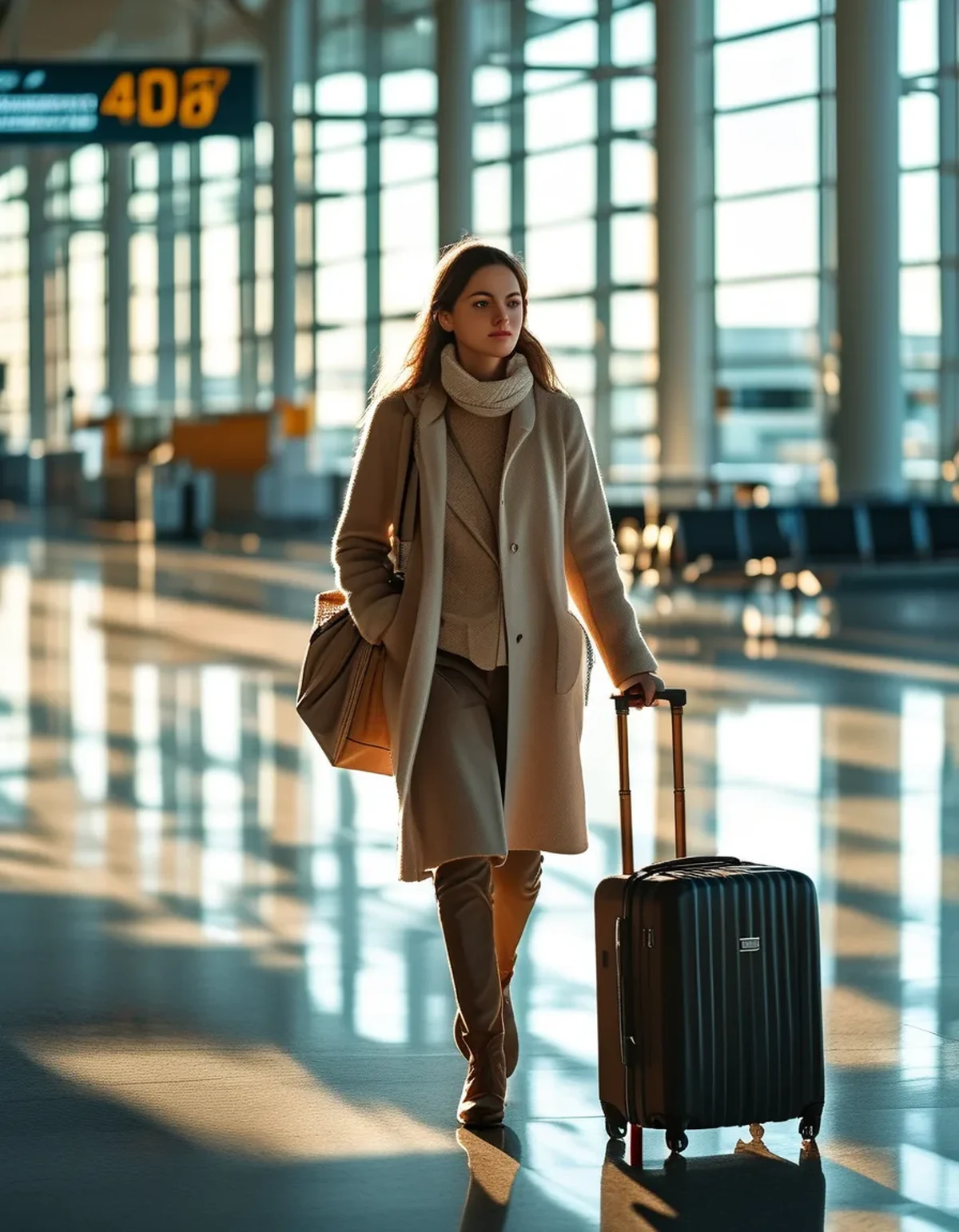
Build in four pieces, from skin outward. Each has a specific job and the whole thing has to work while seated.
Base layer: fitted, breathable, full coverage. A long-sleeve or short-sleeve fitted top that you would be comfortable in for the entire flight if the cabin ran warm. This is the layer you never remove, so it needs to be comfortable against skin for hours - flat seams matter more than usual here.
Bottom: full-length or seven-eighth, not shorts. Legs go cold first when seated, and there is no practical way to add coverage mid-flight. A soft, non-restrictive full-length legging or a relaxed travel trouser handles departure heat better than people expect, because heat exposure at the airport is brief and mostly indoors.
Mid layer: removable while seated. This is the layer people get wrong. A pullover requires standing and a certain amount of contortion in a middle seat. A full-zip or a button-front comes off without leaving your chair, which means you will actually adjust it rather than suffering.
Outer layer: packable, and it belongs in the personal item. Not the overhead bin. Anything you might want mid-flight has to be reachable without standing up, and a light packable jacket compresses to almost nothing.
Then add the two highest-value small items: a scarf or large wrap, which doubles as a blanket, a pillow, and a light barrier, and proper socks. Feet are the single most common cold complaint and the easiest to solve.
What Nobody Tells You About Travel Day Comfort
Your feet swell, and this changes shoe math. Lower cabin pressure and prolonged sitting cause mild fluid pooling in the lower legs and feet, which is why shoes that fit at departure can feel tight on landing. Choose footwear with a little room or an adjustable closure, and avoid anything you had to squeeze into at home.
Slip-on shoes are a security-line decision and a comfort decision. Easy removal speeds up screening, but the more relevant point is being able to loosen or slip out of them at your seat without producing a whole production.
Compression socks are not just for long-haul. For anyone with a history of swelling, or on flights over about four hours, graduated compression socks reduce lower-leg swelling and discomfort meaningfully. Talk to a clinician first if you have circulation issues or a clotting history.
Dry air affects skin and eyes more than temperature does. The single most useful thing in the personal item after a layer is a small moisturizer and, for contact lens wearers, either drops or glasses instead of lenses.
The scarf is the most versatile item you can bring, and it takes no packing space. It is a blanket over the lap, a pillow against a window, a shoulder cover, and an instant warmth adjustment - and unlike a jacket, it works while you are wedged into a seat.
And the destination is what should govern your shoes. People dress the flight and forget they have to walk to ground transport in whatever the arrival city is doing. Sandals that made sense at an 85-degree departure are a genuinely unpleasant surprise in a 55-degree drizzle.
How do you handle security and the arrival transition?
Keep the layers separable and metal-free. Anything with a belt, heavy hardware, or metal detailing costs time. A soft waistband, a zip-front layer you can shed into a bin in one motion, and shoes without buckles will move you through faster than any packing strategy.
Do the temperature transition before you land, not after. Add the mid and outer layers during descent while you are still seated. Trying to reorganize an outfit in a jet bridge with a bag in each hand is where people give up and arrive cold.
Put arrival-critical items in the personal item. If you land somewhere meaningfully cooler, the warm layer needs to be under the seat in front of you rather than in a bin four rows back or, worse, in checked luggage.
Plan for the walk, not the building. Terminals are climate controlled; the taxi rank, the parking shuttle, and the train platform are not. The five minutes outdoors is what determines whether you were dressed correctly.
Check the arrival forecast for the actual hour you land. A late-September evening arrival can be 15 degrees below that city’s daytime high, and daytime highs are what most people glance at.
And build one outfit that covers both ends. The goal is not two outfits with a change in between - it is one base that works in both climates with two removable layers doing the adapting. That is the difference between traveling comfortably and carrying a bag of clothes you never open.
FAQ: Flight Outfit Questions, Answered
What should I wear on a plane in the fall?
Dress for the coldest of your three environments - departure, cabin, arrival - with a fitted base layer, full-length bottoms, a mid layer that unzips while seated, and a packable outer layer in your personal item. Add a scarf and proper socks, which solve the two most common cold complaints.
Why is it always so cold on planes?
Cabins run around 71 to 75F, but constant air circulation, very low humidity around 10 to 20 percent, and sitting still for hours all reduce your felt temperature well below the actual number. Window seats sit closest to the cold fuselage wall and feel coolest of all.
Should I wear compression socks on a flight?
They meaningfully reduce lower-leg swelling and discomfort on flights over about four hours, and they are worth it for anyone prone to swelling. Check with a clinician first if you have circulation problems or a clotting history.
What shoes are best for flying?
Slip-on or easily adjustable shoes with a little room, since feet swell in flight from lower cabin pressure and prolonged sitting. Choose them for the arrival climate rather than the departure one - the walk to ground transport is what decides whether the choice was right.
TL;DR:
- Dress for the coldest of departure, cabin, and arrival, then make everything above the base layer removable.
- Cabins feel far colder than their 71 to 75F because of constant airflow, 10 to 20 percent humidity, and sitting still.
- Choose a mid layer that unzips while seated - a pullover you cannot remove in a middle seat will not get adjusted.
- Keep the warm layer in your personal item, not the overhead bin, and re-layer during descent rather than in the jet bridge.
- Feet swell in flight, so pick shoes with room and choose them for the arrival climate, not the departure heat.
One base, two removable layers, a scarf, and real socks. That is the whole system, and it handles a 30-degree difference between takeoff and baggage claim without a single change of clothes.
Keep Reading
This article is for general informational and styling purposes only. Fit, sizing, and product availability may vary.