Freezing Plane, Warm Destination: How to Dress for Both in One Outfit

Quick Answer: Build the outfit at destination temperature and add exactly three removable layers for the plane: a mid layer you can sleep in, a scarf or wrap, and socks. Cabins typically run around 22-24C but feel colder because of low humidity and constant airflow, so you need warmth you can shed in under thirty seconds without going anywhere.
The classic mistake is dressing for the plane and spending your first two hours at the destination sweating in a jumper you can’t take off because of what’s underneath. Reverse the order and the problem disappears.
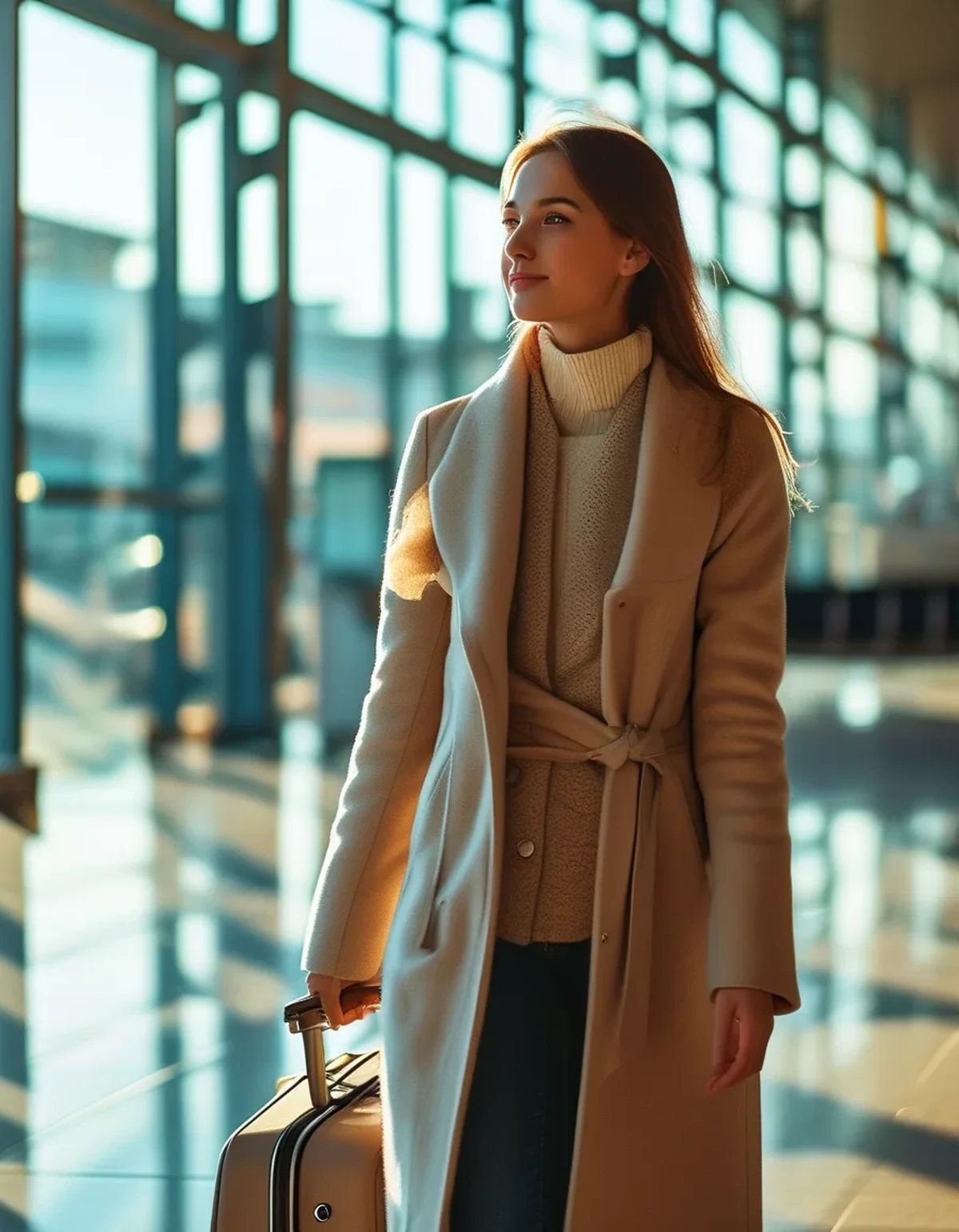
Why does a 23C cabin feel cold?
Three things, none of which show up on a thermometer.
Humidity is very low. Cabin air is typically far drier than indoor air on the ground - often below 20% relative humidity. Dry air pulls moisture off your skin, and evaporation cools you continuously.
Airflow is constant. The air in a cabin is exchanged frequently, so there’s persistent low-level movement across your skin. Moving air at 23C feels like still air several degrees cooler.
You’re not moving. Sitting still for hours drops your own heat production substantially. The same temperature that’s comfortable while you walk around a terminal is genuinely cold once you’ve been seated for ninety minutes.
The practical implication: you need more insulation on a plane than the temperature suggests, but you need it removable, because the aircraft door opens onto a completely different climate. Extremities matter disproportionately here - cold feet and cold hands are what actually ruin a flight, not a cold torso.
What should the base of the outfit be?
Whatever you’d wear at the destination, chosen for the arrival temperature rather than the departure one.
The base, for a warm arrival:
- A breathable top - a fitted tee, a light knit, or a sleeveless top with a shirt over it
- Bottoms with give - wide-leg trousers, a midi skirt, or well-fitting travel leggings. Anything with a rigid waistband becomes an enemy around hour four
- Shoes you can get on and off in one motion - slip-ons or trainers you don’t need to unlace
Fabric matters more than usual here. Natural fibres and blends - cotton, linen blends, merino, tencel - handle the dry-then-humid transition far better than full synthetics, which trap heat the moment you step out of the terminal.
One deliberate exception: merino as a base layer is the single best-performing travel fabric for exactly this problem. It insulates when you’re cold, breathes when you’re warm, and doesn’t hold odour over a long day. A thin merino tee under a shirt covers most of the temperature range on its own.
Avoid anything you’d be uncomfortable being seen in at your destination without the outer layers, because that’s what you’ll be wearing when you land.
The three-layer plane kit
Three items, all removable in seconds, all packable into a personal item.
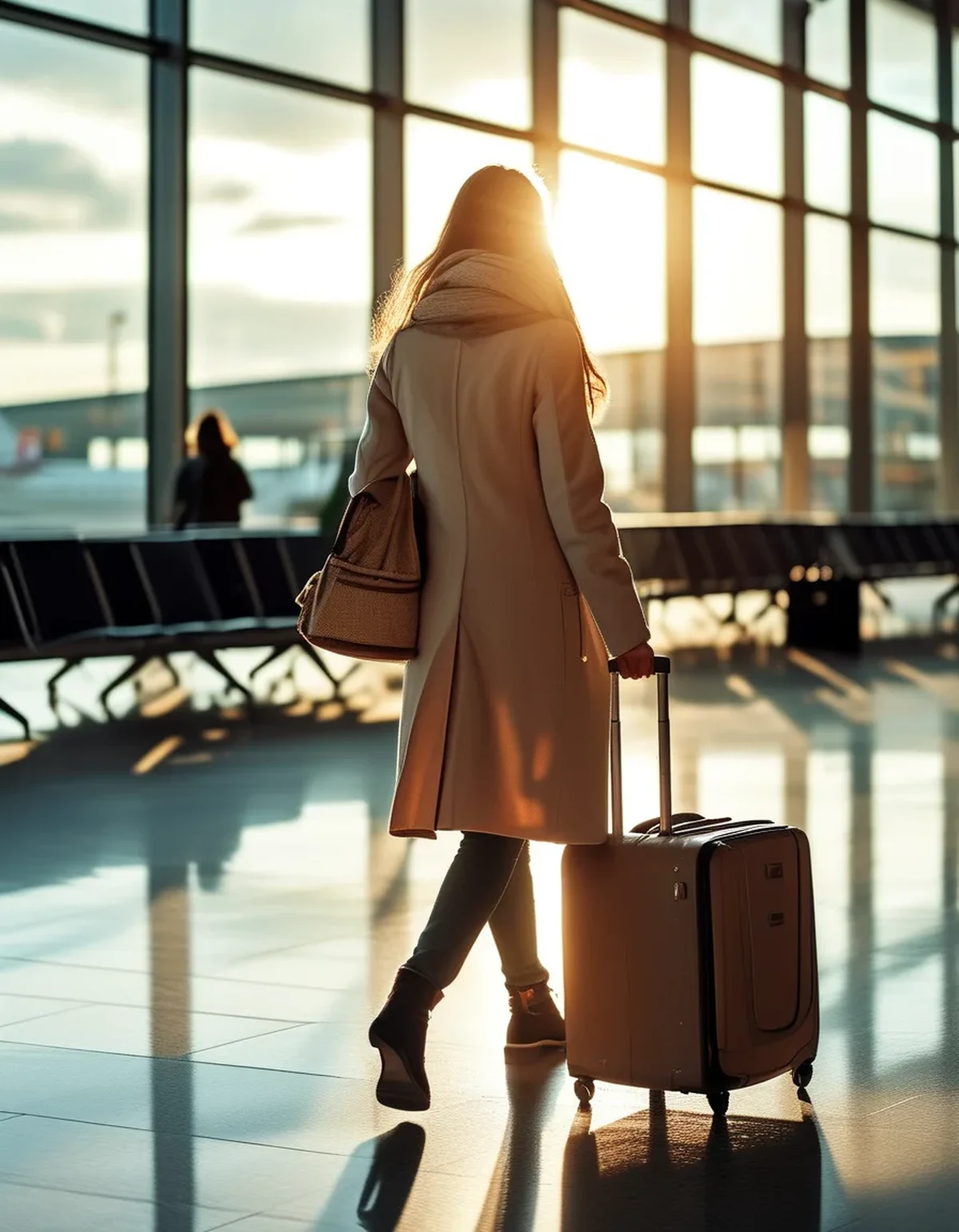
1. The mid layer you can sleep in. An oversized cardigan, a soft zip hoodie, or a light fleece. The requirement is that it’s comfortable with a seatbelt over it and doesn’t have hardware that presses when you lean against the window. Zip beats pullover - you can vent without removing it.
2. The scarf or wrap. The highest value-per-gram item in travel. A large scarf works as a neck warmer, a shoulder blanket, a lumbar cushion, a light eye cover, and a barrier against a cold window. Pick something around 70cm x 180cm in a soft knit or a merino weave.
3. Socks. Cold feet are the most common cause of being unable to sleep on a plane, and shoes that were comfortable at gate time often aren’t at hour five as feet swell. Bring proper socks, put them on after takeoff, and take the shoes off.
What to leave out: a heavy coat. It’s dead weight on a warm arrival, it doesn’t fit in the overhead with anything else, and its job is done better by the mid layer plus the scarf.
The order of removal on descent: socks and shoes first (do it 40 minutes out, feet swell), then the mid layer, scarf last. By the time the doors open, you’re in the destination outfit.
5 Mistakes That Ruin the Transition
1. Packing the layers in the overhead. The whole system fails if you can’t reach it. Everything you plan to add or remove goes in the personal item under the seat in front of you.
2. Choosing a mid layer with a hood you can’t lie against. Bulky hoods push your head forward against a headrest and make sleeping worse than no layer at all. Test it against a sofa back before you pack it.
3. Wearing your tightest shoes. Feet swell measurably on long flights due to reduced circulation while seated. A shoe that’s snug at check-in can be painful at landing. Go half a size roomier, or wear something with give.
4. Dressing for the destination’s average rather than the arrival hour. Landing at 11pm in a place that hits 30C at noon is a completely different problem from landing at 2pm. Check the forecast for your actual arrival time - this is the third mistake and the one seasoned travellers still make.
5. Forgetting the terminal is a third climate. Airports at both ends are usually air-conditioned to something colder than either the plane or outside. Your mid layer needs to survive the walk to baggage claim, then come off at the door.
What changes for a cold arrival?
The logic inverts, but the principle holds: dress for the destination, carry the difference.
Warm departure to cold arrival:
- Base outfit is still what you want on landing, which now means warmer bottoms and closed shoes
- The bulky item - the coat - travels in the overhead or is worn through security and immediately removed
- Wear your heaviest single item rather than packing it. Coats and boots are the worst weight-to-space ratio in any suitcase
- Gloves and a hat go in the personal item, not in checked luggage. Arriving somewhere cold with your gloves in a bag on a carousel is a specific and avoidable misery
For an overnight flight in either direction, add one thing: a change of top in the personal item. Not for style - for the fact that fourteen hours in one shirt in dry air is genuinely unpleasant, and a two-minute change in the arrivals toilet resets the entire day.
As summer turns to autumn, the mismatch gets bigger rather than smaller - departures are still warm, and arrivals in the northern half of the map are increasingly not. This is the season the three-layer kit earns its keep.
FAQ: Plane Outfit Questions, Answered
Are leggings still fine to fly in?
Yes. The old advice about synthetic fabrics in an emergency is worth knowing but applies to a vanishingly rare scenario; comfort over many hours is the practical consideration. Choose thicker, opaque ones with a soft waistband.
Should I wear compression socks?
On flights over about four hours, many people find them helpful for swelling and comfort. Put them on before you board, not mid-flight. If you have circulation problems or a clotting history, ask a doctor rather than self-prescribing.
What about jewellery and belts through security?
Minimise both. A belt you have to remove and re-thread costs you a minute at exactly the wrong moment. If you need one, wear the outfit so it works without.
Is a travel outfit different for a short-haul flight?
Less layering, same principle. Under about three hours the cabin rarely gets cold enough to matter, and the scarf alone usually covers it.
TL;DR:
- Build the outfit for the arrival temperature, then add layers for the plane
- Three removable layers: a zip mid layer, a large scarf, and proper socks
- Keep all of them under the seat, never in the overhead
- Shoes half a size roomier - feet swell measurably on long flights
- Check the forecast for your arrival hour, not the destination’s daily average
One outfit, three layers, thirty seconds of adjustment. You should be able to walk off the plane already dressed for wherever you’ve landed.
See It in Motion
Seen here: High Waist Yoga Leggings with Side Pockets — shop it on bubblelime.com
Keep Reading
This article is for general informational and styling purposes only. Fit, sizing, and product availability may vary.