What to Wear on a Red-Eye: Dressing for a Flight You Are Trying to Sleep Through

Quick Answer: For a red-eye, prioritise a soft elastic waistband, no rigid seams at the hips or shoulders, one layer you can pull over your eyes or wrap around you, and shoes you can slip off and back on without a struggle. The goal is a garment set that lets your body temperature drop - which is what actually initiates sleep - rather than one that just feels cosy at the gate.
A red-eye is not a normal flight in different lighting. You’re asking your body to sleep sitting mostly upright, in a dry cabin, in a seat that wasn’t designed for it. Your outfit can help with that or fight it, and most travel outfit advice is written for daytime flights.
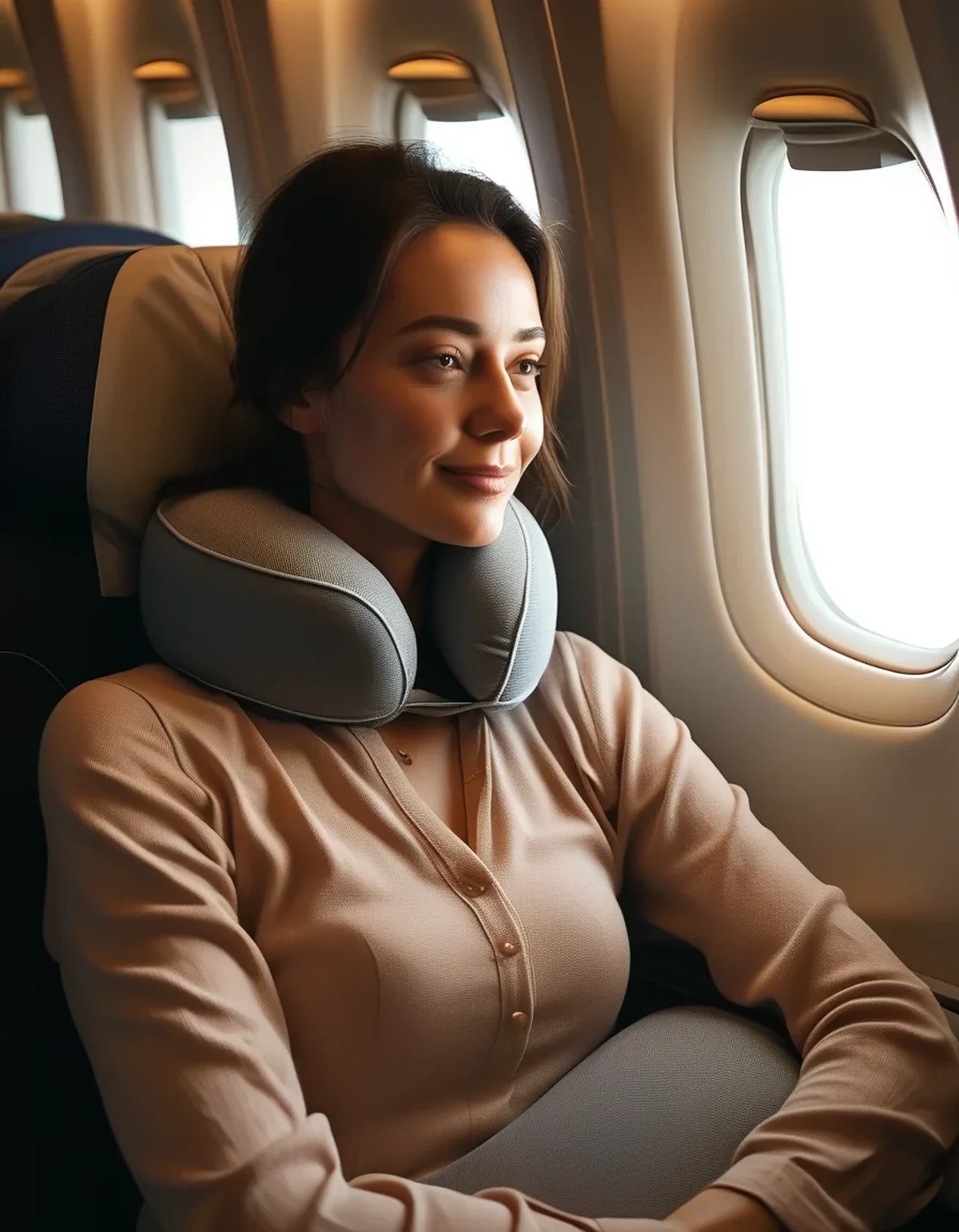
What actually stops people from sleeping on a plane - and what can clothing fix?
Three things dominate: temperature swings, pressure points, and light. Clothing can meaningfully address all three, which is more than it can do on a daytime flight where comfort is the only goal.
Temperature is the big one, and it’s usually misunderstood. Falling asleep requires your core temperature to drop slightly - roughly 1C - while your hands and feet stay warm. This is why overdressing your torso backfires: a heavy hoodie keeps your core too warm to initiate sleep while your feet are still freezing in the aisle draught.
The correct configuration is the opposite of instinct: light on the core, warm on the extremities. Warm socks, a light layer over the torso, and something you can add or remove as the cabin swings.
Pressure points come from seams, hardware, and rigid waistbands pressing into a body that isn’t moving for six hours. Anything that’s mildly annoying at minute ten is genuinely painful at hour four.
Light is the easy one - an eye mask or a scarf you can pull up works, and it’s worth packing rather than improvising.
What should the base layer actually be?
Bottoms: soft elastic waistband, no button, no zip, no rigid seam across the hip. This rules out jeans and most structured trousers regardless of how comfortable they feel standing up. Sitting compresses the waistband into your abdomen for hours, and a button placket is the single most common source of red-eye discomfort.
Good options: wide-leg soft trousers, straight-leg knit trousers, or leggings under something looser. Avoid heavy compression leggings for overnight flights - the tightness that helps circulation on a daytime flight can be uncomfortable to sleep in.
If you want compression benefits, compression socks with loose trousers is the better combination than compression bottoms.
Top: a soft, non-restrictive layer with no rigid shoulder seams. Anything with a stiff seam sitting exactly where your shoulder meets the headrest will wake you up repeatedly.
Bra: this is worth thinking about. Many people find underwire genuinely painful to sleep in against a seat back. A soft bralette or a bra with removable structure is a meaningful upgrade in comfort for an overnight flight specifically.
How should the layering actually work?
Cabins swing more overnight than during the day - crews often lower the temperature for the sleep period, then it warms again before landing.
A workable three-layer system:
Layer 1 (never removed): soft top and bottoms as above. Layer 2 (temperature regulation): a light knit cardigan or zip-up. Zip-up beats pullover, because you can adjust it without standing up or disturbing a neighbour. Layer 3 (the multi-purpose one): a large scarf or lightweight blanket wrap. This is the highest-value item on the list - it works as a blanket, a pillow if folded, a light blocker over your eyes, and an extra layer in a cold terminal at 5am.
Socks are non-negotiable. Warm feet make falling asleep easier, and airplane floors are genuinely cold. Bring a dedicated pair to change into once you’re seated rather than sleeping in the socks you walked through the airport in.
Shoes: slip-on, one size of give. Feet swell on overnight flights more than daytime ones because you’re immobile longer. A shoe that fits perfectly at departure can be uncomfortable at landing.
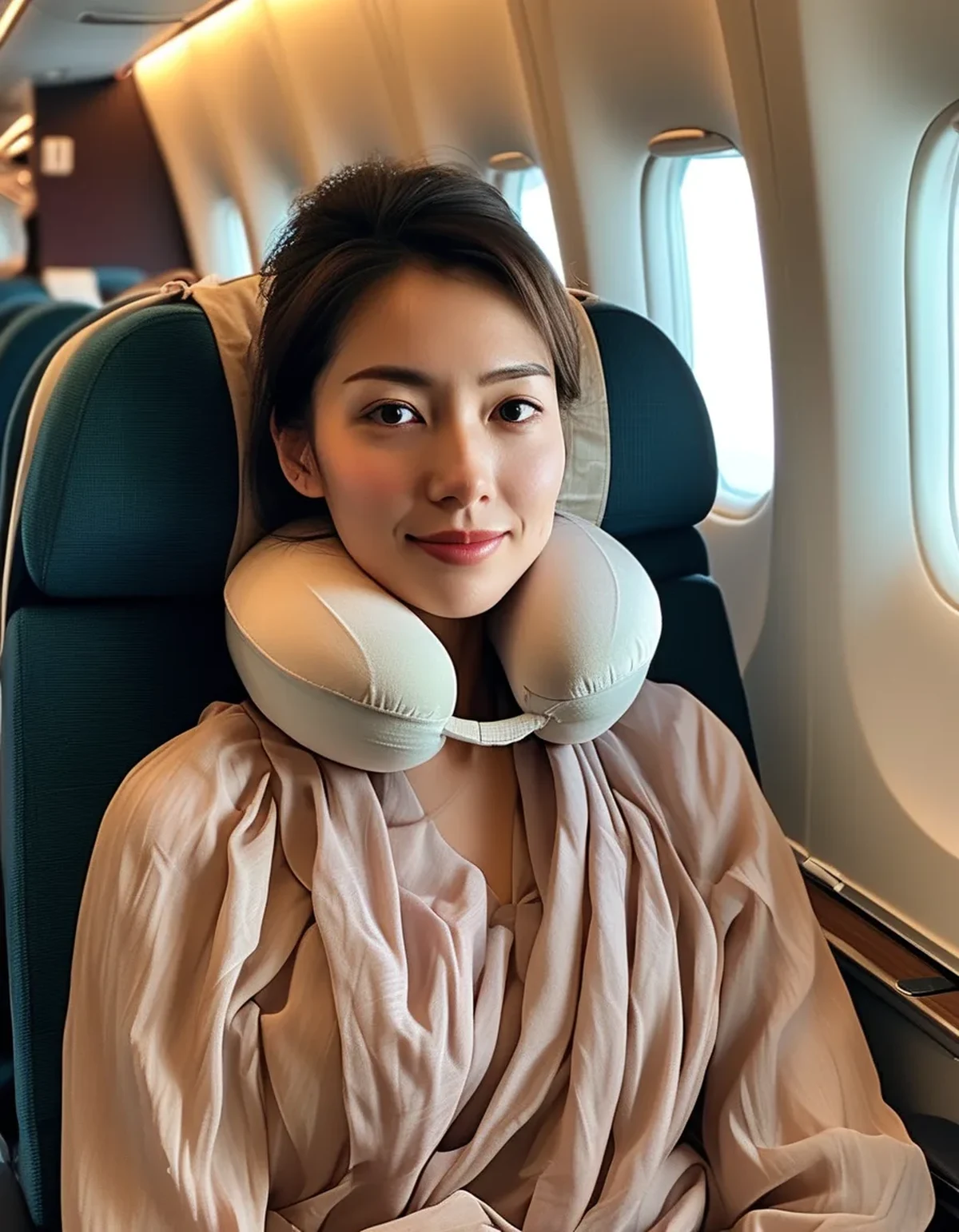
5 Mistakes Everyone Makes on a Red-Eye Outfit
1. Dressing for the destination instead of the flight. If you’re landing straight into a meeting, the answer is a change of clothes in your carry-on, not sleeping in the meeting outfit. Nobody has ever slept well in a blazer.
2. Overdressing the torso and underdressing the feet. This is the most common error and it directly works against the temperature drop that initiates sleep. Warm socks, lighter core.
3. Wearing anything with a hood you’ll actually lie on. A bunched hood behind your neck pushes your head forward into exactly the position that produces a stiff neck. If you want neck support, use a proper neck pillow.
4. Jewellery and hair that seemed fine at the gate. Rings on swelling fingers, earrings against a headrest, and a high bun that hits the seat back are three small things that each cost you an hour of sleep.
5. Skipping the pre-boarding change. The best red-eye move is arriving in your normal clothes and changing into the sleep set in the terminal bathroom before boarding. It takes four minutes and completely changes the flight.
What about arriving presentable at 6am?
The tension in every red-eye outfit is between sleeping well and not looking like you slept badly. The resolution is to stop trying to do both with the same clothes.
Pack a small arrival kit in the seat-back-accessible part of your bag: a fresh top, deodorant, a face mist or moisturiser (cabin air is extremely dry), a toothbrush, and a hair tie. Fifteen minutes in an arrivals bathroom does more than any wrinkle-resistant fabric.
Choose fabrics that recover. Knits, jersey, and anything with a small amount of elastane come out of six hours of sitting far better than linen or crisp cotton. If a fabric wrinkles on a chair at home, it will be worse after a flight.
Darker colours and mid-tones hide the flight better than white or pale colours, which show every crease and every spilled drink.
One structured piece changes everything. A single blazer or structured jacket added over soft layers at landing reads as put-together even when everything underneath is sleepwear-adjacent. Keep it in the overhead, not on your body.
FAQ: Red-Eye Outfit Questions, Answered
Should I wear compression socks on an overnight flight?
Many people find them helpful for the swelling that comes with long immobility. If you have circulation concerns, a doctor’s input is worth having first. This is general information, not medical advice.
Is it worth changing into pyjamas on the plane?
Actual pyjamas are usually more than needed and add a change step at both ends. Soft clothing that reads as normal daywear achieves most of the benefit.
What’s the single best item to bring?
A large lightweight scarf or wrap. It covers blanket, pillow, light blocking, and terminal warmth in one packable item.
Do I need different shoes than a daytime flight?
Same principles, more important: slip-on and with room to spare. Overnight swelling is more pronounced than on shorter daytime flights.
TL;DR:
- Light on the core, warm on the feet - your core temperature needs to drop to fall asleep
- Soft elastic waistband only; no buttons, zips, or rigid hip seams
- A large scarf is the highest-value item: blanket, pillow, eye cover, terminal layer
- Change into the sleep set before boarding, and pack a small arrival kit
- Slip-on shoes with room to spare - overnight swelling is real
Dress for the six hours in the seat, not for the ten minutes walking off the plane.
See It in Motion
Seen here: High Waist Yoga Leggings with Side Pockets — shop it on bubblelime.com
Keep Reading
This article is for general informational and styling purposes only. Fit, sizing, and product availability may vary.