Why Planes Are So Cold — and the Layer System That Fixes It

Quick Answer: Cabins typically run around 22 to 24°C but feel colder because the air is extremely dry and you are sitting still for hours. The fix is three layers you can adjust independently - a close base layer, a mid layer with sleeves you can push up, and a packable outer you can also use as a pillow. Cover ankles and neck specifically; those two areas do most of the work.
You boarded sweating in a 30-degree August terminal and by hour two you are wearing the blanket like a shawl and still cold. The temperature did not really change that much - what changed is that you stopped moving.
Why does a 23-degree cabin feel like 17?
Three things stack, and none of them is the thermostat.
Humidity is extremely low. Cabin air is often below 20 percent relative humidity, compared with 40 to 60 percent in a normal room. Dry air pulls moisture from your skin, and evaporation cools you. This is the biggest single factor and the one nobody accounts for.
You are sedentary for hours. Sitting still produces very little metabolic heat. The same room temperature that is comfortable while you move around a house is genuinely cool when you have not stood up in three hours.
Airflow is constant. Cabin air is exchanged frequently and moves past you continuously. Moving air over slightly damp skin is the definition of wind chill, at a small scale.
Add a fourth for long flights: body temperature drops naturally in the evening as part of your circadian rhythm, so an overnight flight hits you at the point when you were always going to feel coldest.
Understanding this changes what you pack. You are not dressing for a cold room - you are dressing for dry, moving air against a body producing very little heat.
What should the base layer actually be?
Close to the skin, breathable, and long enough to stay tucked when you slouch in a seat.
Material matters more than thickness here. Cotton absorbs moisture from the terminal sweat and then holds it against you in the dry cabin, which is exactly the evaporative cooling you are trying to avoid. Merino or a technical blend moves moisture away and keeps working when slightly damp.
What works: a fitted long-sleeve merino top, or a soft technical tee if you run warm. A seamless base is worth it on flights over about four hours - seams that are unnoticeable for an hour become sore points by hour six against a seat.
Bottom half: soft leggings or relaxed trousers with genuine stretch. The waistband is the detail that decides comfort here - a firm structured band that is fine standing up digs after three hours of sitting. Choose a wide, soft band or an elasticated waist.
Avoid anything you cannot sit in for eight hours. The test is not how it looks in the mirror standing up. Sit down in it, cross-legged, for ten minutes at home before you commit.
What does the mid layer need to do?
This is the layer you actually adjust, so its job is being easy to change without standing up.
Best options: a lightweight crew or quarter-zip in merino or fleece, a soft cardigan, or an oversized shirt. What they share is sleeves you can push up and a front you can open partially.
Why a quarter-zip is quietly ideal: the neck is one of the two places you lose heat fastest, and a zip lets you close or open exactly that area without changing the whole layer. Opening a zip four inches is a real temperature adjustment.
Avoid anything you have to pull over your head on a full flight. Removing a jumper in a middle seat is genuinely awkward, and the result is that you leave it on while overheating and then feel worse.
Sizing: slightly relaxed. A mid layer that fits snugly over the base traps less air, and trapped air is what insulates. One size up from your usual is often better here than your normal fit.
Colour: something that survives a spilled drink and does not show creases badly. Mid greys, navy, and soft neutrals do this best.
Why do ankles and neck matter so much?
Because heat loss is not evenly distributed, and these two areas punch far above their surface area.
Ankles. Blood vessels sit close to the surface, and the ankle is often the one bit of skin exposed by a cropped legging in a footwell with cold air moving through it. Cropped trousers plus bare ankles is the single most common reason people feel cold on flights. Full-length bottoms and proper socks - not no-show liners - fix a surprising amount on their own.
Neck. Same principle, more surface area. A light scarf or a snood is the highest warmth-per-gram item you can carry, and it doubles as an eye cover for sleeping and a rolled neck support.
Feet, related. Circulation slows when you sit still for hours, and cold feet make your whole body feel cold regardless of what your torso is doing. Wool socks, changed into after boarding, are worth the small effort. Bring a spare pair on long flights; putting on dry socks four hours in is disproportionately good.
Compression socks are worth considering on flights over about four hours, particularly if you have any risk factors for circulation issues - they also happen to keep the ankle covered. Worth a conversation with a pharmacist or doctor if you fly long-haul often. This is general information, not medical advice.
What Nobody Tells You About Dressing for Flights
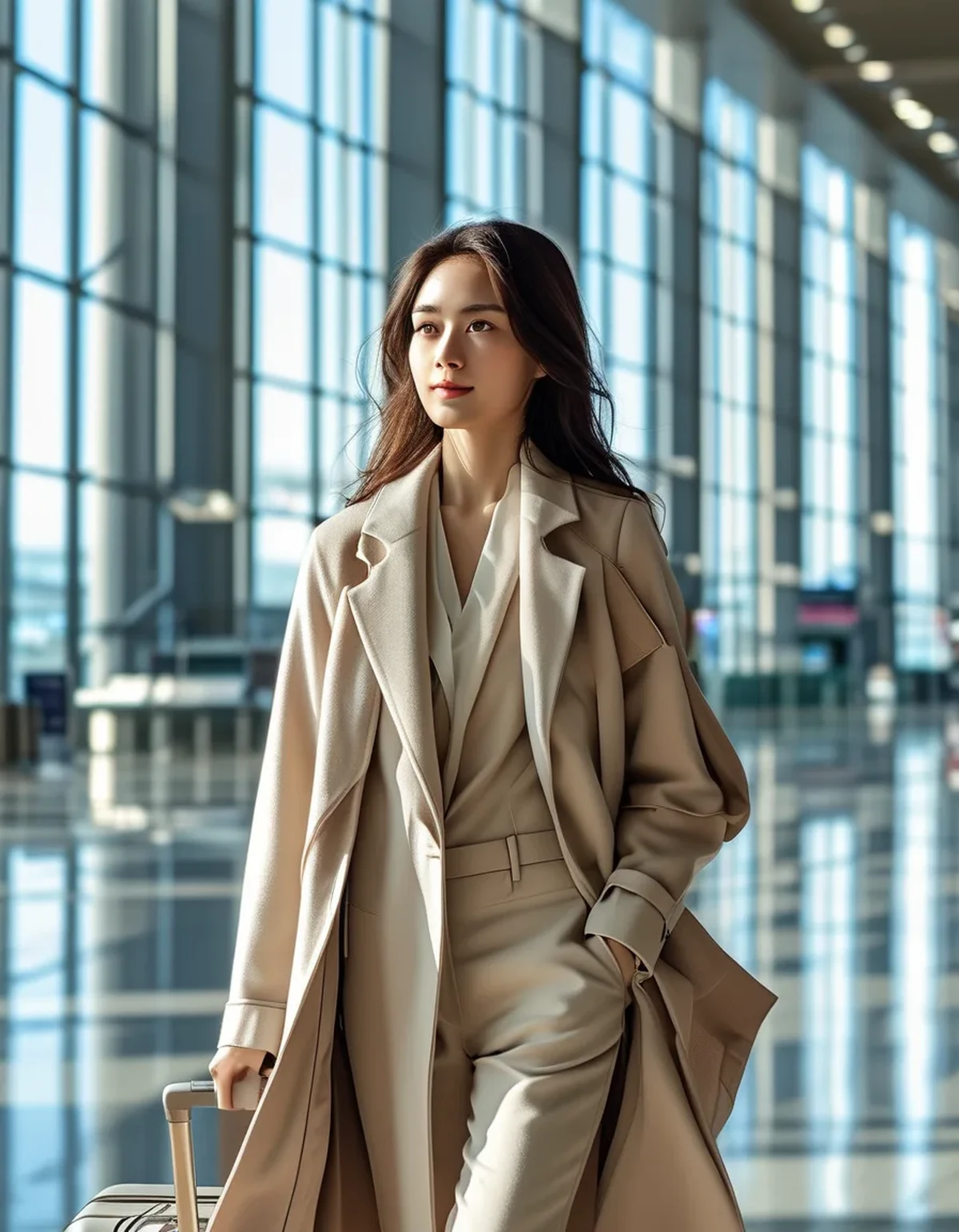
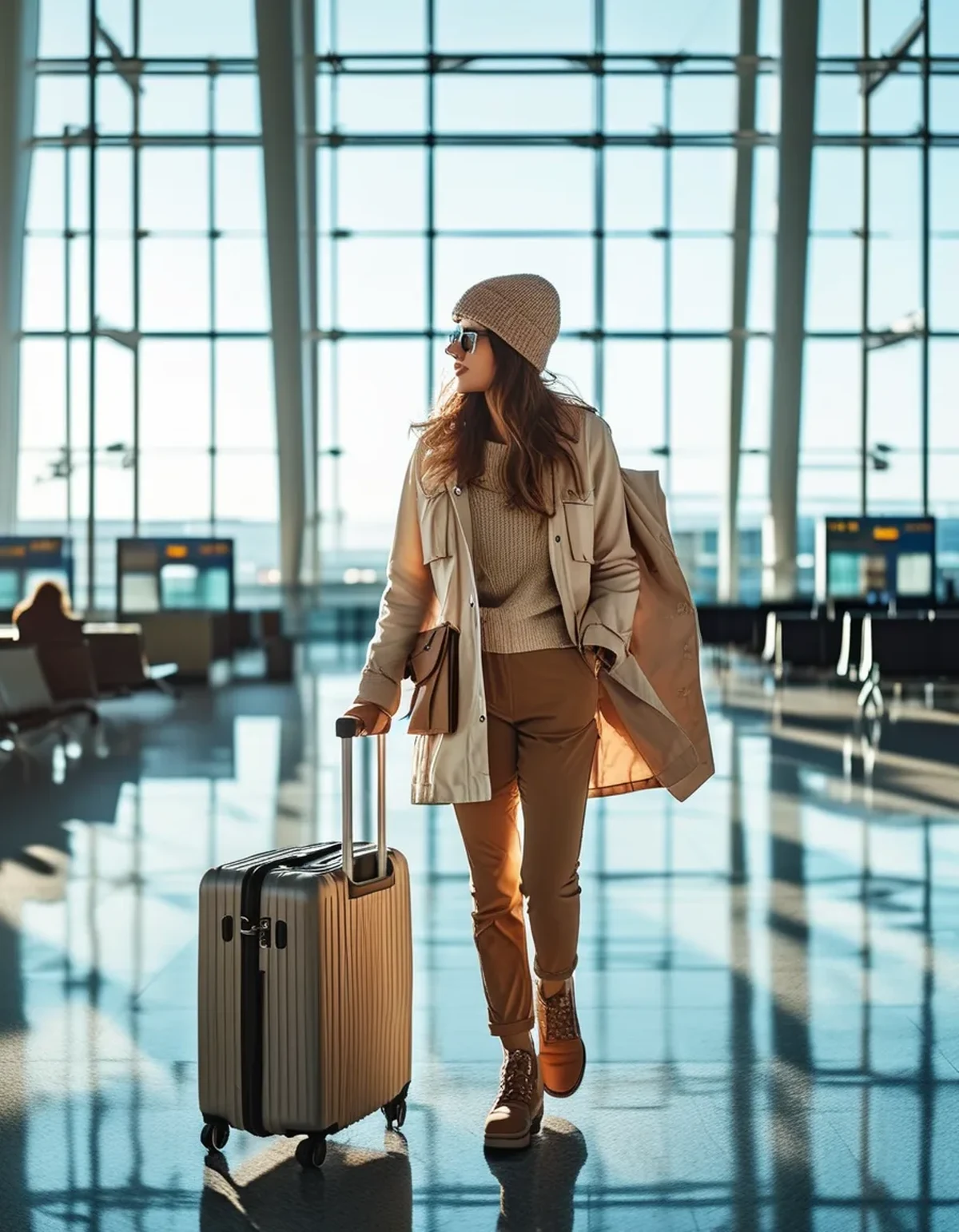
The terminal is the hard part, not the plane. In late August you are moving through a hot terminal with luggage, then sitting in dry cool air for hours. Dressing for the plane means sweating in the terminal, and arriving at your seat slightly damp is the worst possible starting condition. Carry the outer layer, wear the base and mid, and put the outer on once seated.
Your outer layer should be your pillow. A packable puffer or a large scarf compresses into decent neck support. Choosing an outer that does this job means one fewer item to carry.
Shoes come off, so socks become visible and structural. Slip-on shoes you can get back on with slightly swollen feet, and socks you are content to walk to the toilet in. Feet swell measurably on long flights, which is why the shoes that fit at departure feel tight at landing.
Dry air affects more than temperature. Lips, eyes, and contact lenses all suffer. Contact lens wearers on long flights are often more comfortable in glasses, and a lip balm in a pocket - not in the overhead bag - is a small thing that matters at hour five.
Hoods beat hats. A hood on the mid or outer layer gives you a light-blocking, warm option that cannot fall off while you sleep and does not need packing separately.
Wear the bulkiest items. Obvious once said, but a coat and boots worn take zero luggage space, and the coat becomes a blanket.
FAQ: Flight Outfit Questions, Answered
Are leggings still the best option for long flights?
They are hard to beat for comfort, with two caveats: choose full length rather than cropped, and pick a soft wide waistband. A firm compressive band that feels supportive in the gym is uncomfortable after four hours seated.
Should I wear a bra on a long flight?
Entirely personal. If you do, a soft low-impact style without underwire or hard clasps is far more comfortable against a seat back for hours. Many people bring a soft bralette to change into.
Is jeans a bad choice for flying?
Not bad, just less forgiving. Rigid denim with a fixed waistband gets uncomfortable when you sit for hours and feet swell. Stretch denim with a slightly relaxed fit is a reasonable middle ground if you want to look put together on arrival.
What is the one item most people forget?
Socks, if they are wearing sandals or trainers with no-show liners. Cold ankles and feet undo everything else you did right, and the fix weighs almost nothing.
Does the seat position change how cold you get?
A little. Window seats sit against the fuselage wall, which is noticeably cooler, and seats near galleys and doors often catch more airflow. If you know you run cold, an aisle seat away from the doors is marginally warmer.
TL;DR:
- Cabins feel cold because the air is very dry and you are sitting still, not because the temperature is low
- Three adjustable layers: technical or merino base, a quarter-zip or cardigan mid, a packable outer that doubles as a pillow
- Cover ankles and neck specifically - cropped trousers and no-show socks are the most common mistake
- Wear base and mid through the terminal, carry the outer, add it once seated
- Slip-on shoes and a spare pair of socks handle swelling and hour-five discomfort
Dressing for a flight is really about giving yourself three independent adjustments rather than one perfect outfit. Get the layers right and the departure-gate heat and the 3am cabin chill stop being two different problems.
See It in Motion
Seen here: Super High Waist Embossed Yoga Leggings with Inner Pocket — shop it on bubblelime.com
Keep Reading
This article is for general informational and styling purposes only. Fit, sizing, and product availability may vary.