Do You Actually Need Compression Socks for a Flight? Here's When They Matter

Quick Answer: Compression socks meaningfully help on flights over 4 hours, especially if you’ll be seated most of the time. For flights under 2 hours, the benefit is minimal — regular movement matters more than the socks themselves.
You’ve seen every frequent flyer swear by compression socks, and you’ve also seen people fly fine without them for years. The real answer isn’t about whether they work — it’s about which flights actually call for them.
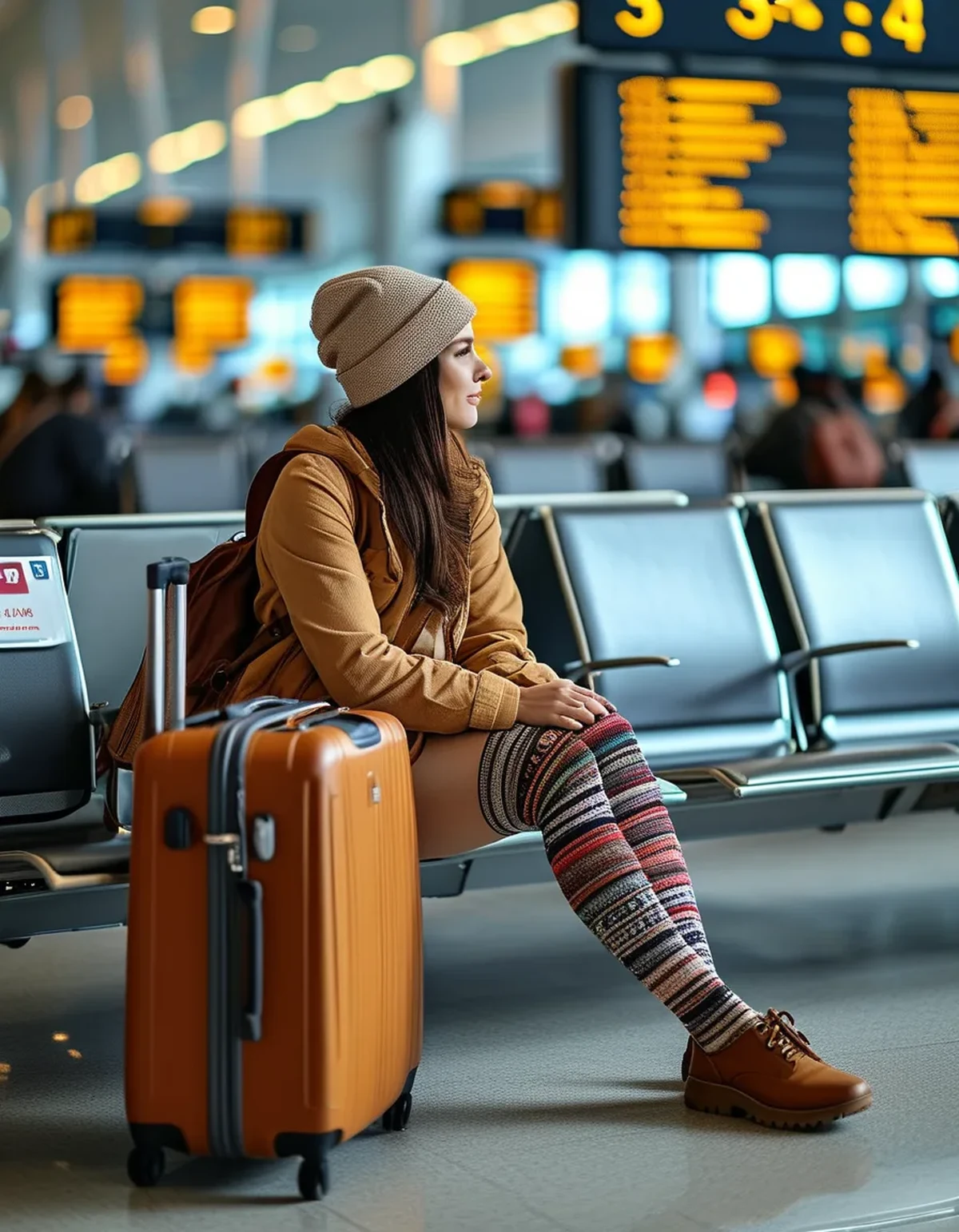
Why do compression socks help on flights in the first place?
Prolonged sitting reduces blood flow in your lower legs, and cabin pressure changes can add mild fluid retention on top of that — the combination is what causes ankle swelling on long flights. Graduated compression (tighter at the ankle, looser toward the knee) helps push blood back upward against gravity, counteracting both effects.
This matters most when you’re seated for extended stretches with limited ability to walk around — which describes long-haul flights far more than short hops.
Is there a flight length where compression socks stop being worth it?
Around the 4-hour mark is where most of the research-backed benefit shows up — shorter flights simply don’t give swelling enough time to develop meaningfully, especially if you get up once or twice. For a 90-minute domestic hop, the sock itself is doing very little that a short walk to the bathroom wouldn’t also accomplish.
They’re not harmful on short flights, just not particularly necessary.

5 Mistakes People Make With Flight Compression Socks
1. Buying the wrong compression level. Over-the-counter travel socks (15-20mmHg) are fine for prevention; medical-grade (20-30mmHg+) should be doctor-recommended, not self-selected.
2. Putting them on after boarding instead of before. Compression works best applied before swelling starts, not after you already feel puffy.
3. Wearing them too loose. A sagging compression sock provides almost none of the graduated pressure it’s designed for.
4. Skipping movement because ‘the socks are handling it.’ Socks help, but they don’t replace getting up and moving on long flights.
5. Wearing them under tight boots. Restrictive footwear on top can counteract the graduated compression underneath.
Who should wear compression socks regardless of flight length?
Anyone with a personal or family history of blood clots, recent surgery, pregnancy, or a doctor’s specific recommendation should wear them on any flight, not just long ones — the risk factors matter more than duration in these cases. If any of this applies to you, this is a conversation worth having with a doctor before you fly, not just a shopping decision.
This is general travel information, not medical advice.
FAQ: Compression Socks for Flying Questions, Answered
What compression level is right for a healthy flyer with no risk factors?
15-20mmHg over-the-counter travel compression is the standard recommendation for general flight comfort and swelling prevention.
Can compression socks be worn all day, not just during the flight?
Yes, mild travel-grade compression is generally fine to wear through a full travel day — put them on before boarding for the most benefit.
Do compression socks help with jet lag?
Not directly — they address circulation and swelling, not your circadian rhythm, so don’t expect them to help with jet lag itself.
TL;DR:
- Compression socks matter most for flights over 4 hours with limited movement
- Under 2 hours, regular movement does most of the same job
- Put them on before boarding, not after you’re already swollen
- Anyone with clot risk factors should wear them regardless of flight length — ask a doctor
Save the socks for the long-haul flights where they actually earn their space in your carry-on. This is general information, not medical advice.
Keep Reading
This article is for general informational and styling purposes only. Fit, sizing, and product availability may vary.