The Layering Order That Fixes Freezing Planes and Sweaty Terminals in One Outfit

Quick Answer: Wear three thin layers instead of one thick one — a breathable base, a lightweight mid layer that ties or zips (not pulls over your head), and a packable outer layer — so you can adjust in seconds without finding a bathroom to change.
You sweat through security in a heavy sweater, then freeze for the entire flight because the cabin is kept near 65°F. One outfit, two completely different climates — the fix is in the layer order, not the total amount of clothing.
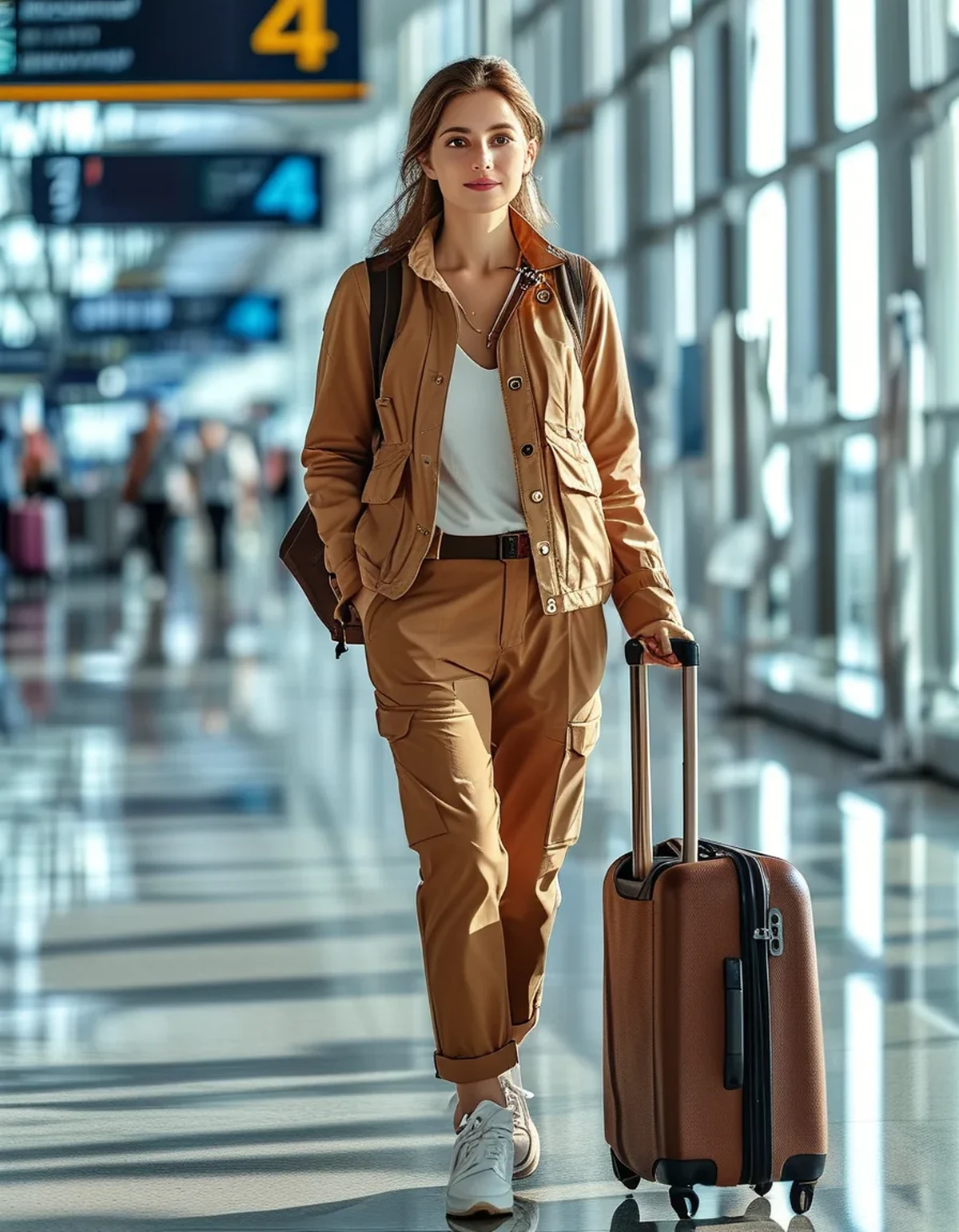
Why One Thick Layer Always Fails
A single warm layer is an all-or-nothing solution: too hot in the terminal line, and by the time you’re seated and cold, taking it off means shoving a bulky sweater into an already-full seat pocket. Three thin layers give you five or six temperature settings instead of two.
Layer 1: The Base You Actually Sweat In
Choose a moisture-wicking or natural fiber base (bamboo or a cotton-modal blend) since this layer is against your skin through security lines, gate walks, and any airport stress-sweat. Avoid pure cotton here — it holds moisture and feels clammy once you cool down on the plane.
Layer 2: The Layer That Comes Off Without a Bathroom Trip
Pick a mid layer that zips or has snap buttons rather than a pullover — being able to open it partway while seated, without removing it entirely, is the whole point of this layer. A lightweight zip cardigan or a snap-front flannel both work well here.
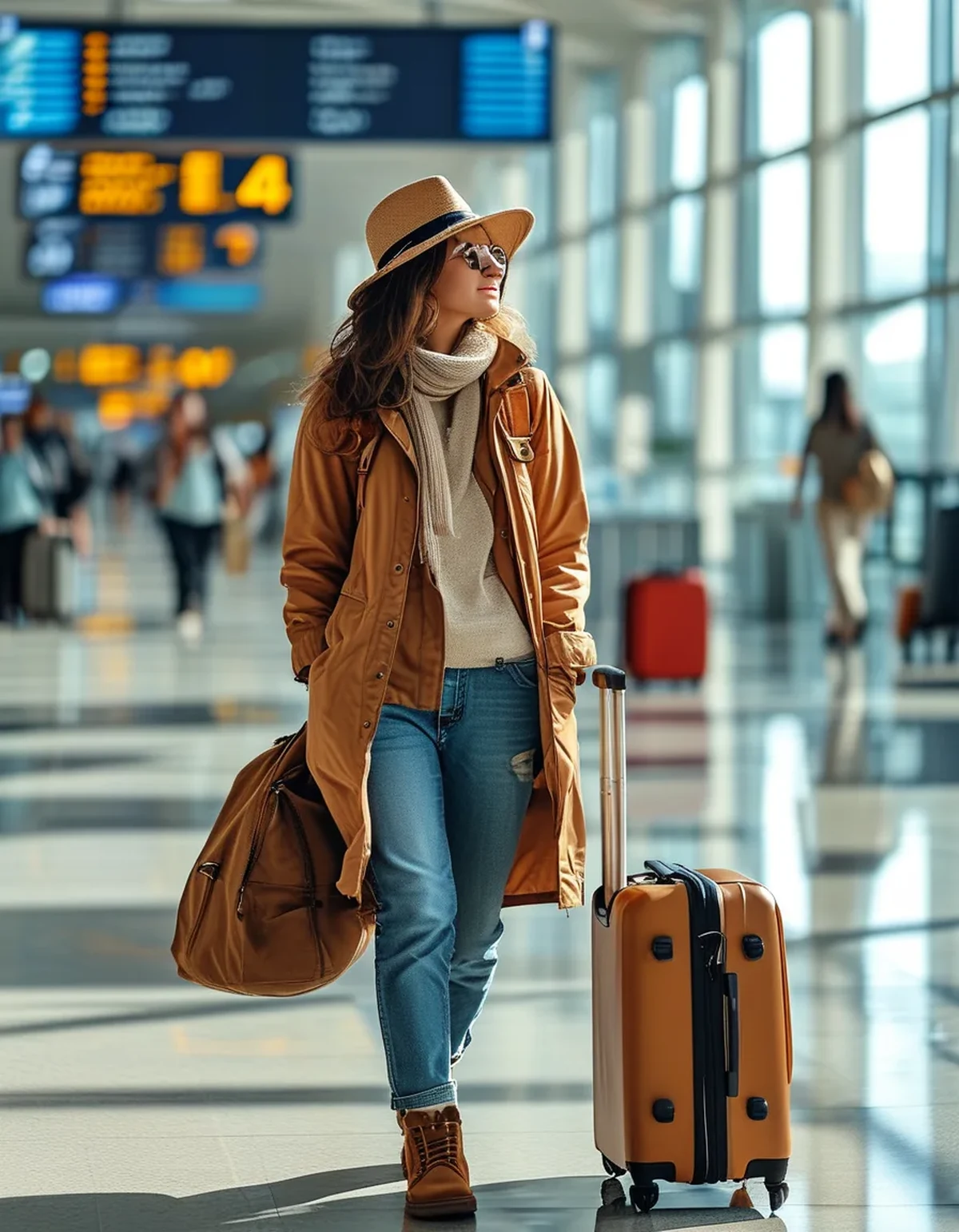
Layer 3: The Packable Outer Layer for the Actual Cold
This is for genuinely cold gate areas or northern climates, and it should compress small enough to stuff into a seat pocket or the top of your bag. A packable puffer or a wool-blend wrap scarf doubles as a small blanket on the plane, solving two problems with one item.
The TSA Line Consideration
Anything with a lot of metal hardware (belts, heavy zippers, boots) slows down security — save true layering flexibility for post-security and wear the simplest, most metal-free version through the line itself. A slip-on shoe and beltless waistband save real time in a long line.
What Nobody Tells You About Cabin Air
Airplane cabin humidity often drops below 20%, drier than most deserts, which is part of why the same temperature feels colder in the air than on the ground. This is also why a scarf or wrap does double duty — it’s both a temperature layer and a way to cover your face/neck against the dry air.

FAQ: Airport and Flight Outfit Questions, Answered
What fabric works best for long flights specifically?
A soft, stretchy knit blend (like a ponte or jersey) holds its shape through hours of sitting better than stiff woven fabrics, which crease and dig in at the waist.
Should I wear compression socks on every flight?
They’re most useful on flights over 4 hours or if you have any circulation concerns — for short hops, comfortable shoes matter more than compression.
Is it better to dress warm or cold for the terminal?
Slightly cool is safer than slightly warm, since you can always add a layer, but sweating through a base layer before boarding is harder to undo.
TL;DR:
- Three thin layers beat one thick layer for airport-to-cabin temperature swings
- Base layer: moisture-wicking, not cotton
- Mid layer: zips or snaps, not a pullover, so it’s adjustable while seated
- Outer layer: packable, doubles as a blanket on the plane
- Save the simplest, metal-free version for the security line itself
The right travel outfit isn’t about picking one temperature to dress for — it’s about building in enough adjustability that neither extreme catches you off guard.
Keep Reading
This article is for general informational and styling purposes only. Fit, sizing, and product availability may vary.